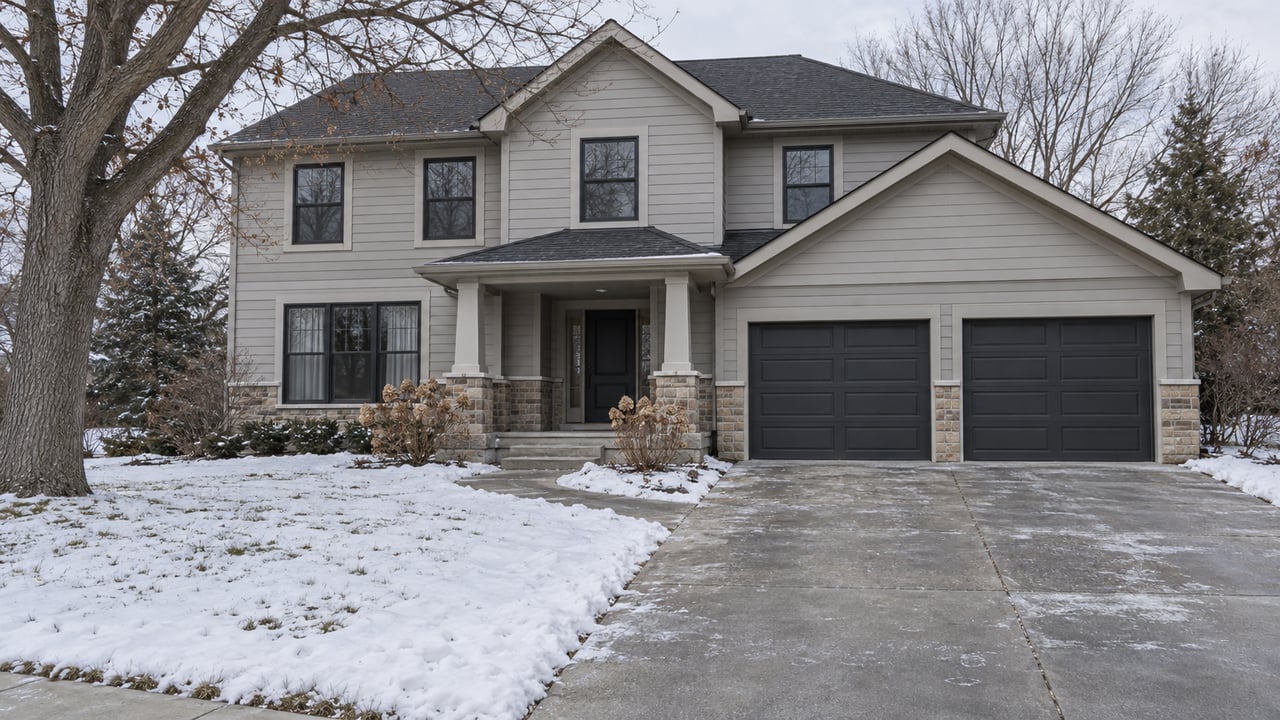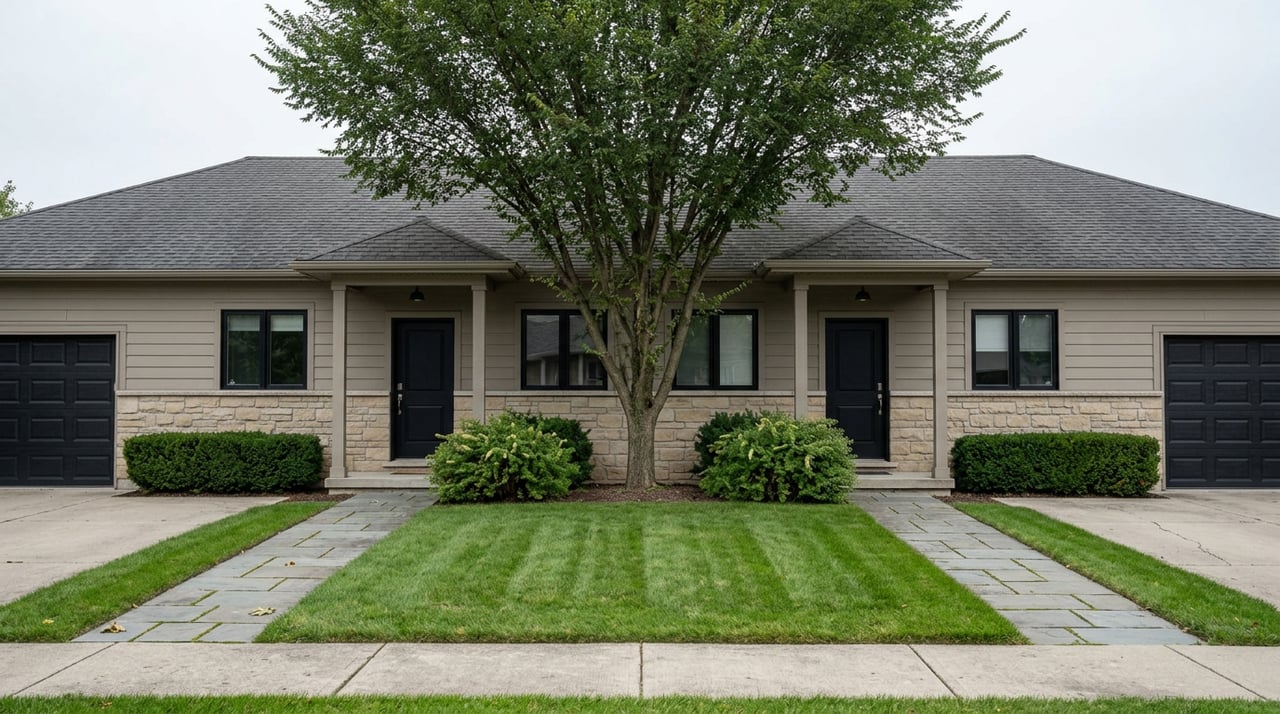
Ask a title company that closes deals in Prairie Trail what slows a file down in the final week, and HOA paperwork comes up more than you would expect. Not because the association is difficult, but because the buyer's side often assumed there was one association to ask. There isn't. Prairie Trail carries a master covenant that every lot owner signs onto, and underneath that master document sit several separate, independently governed associations, each with its own dues, its own services, and its own process for telling a closing attorney what a seller owes. If your purchase agreement says "confirm HOA dues" as a single line item, you may be asking the wrong question before you have even opened escrow.
That distinction matters more in Prairie Trail than almost anywhere else in Ankeny because of how the community was built. It went in as roughly 1,100 acres of former Iowa State University dairy farmland, developed in phases by DRA Properties under Dennis Albaugh starting in 2007, with different builders taking different plats and different product types over nearly two decades. A community that the Business Record has reported includes more than 750 single-family houses, 200 townhomes, and more than 700 apartment units across its build-out was never going to be governed by one homeowners association with one dues structure. It was built as a patchwork, and the patchwork shows up on your closing statement.
One master covenant, several separate governments
Every lot in Prairie Trail is bound by a recorded set of restrictive covenants filed under Prairie Trail Property, Inc. That master document is what gives the whole development its consistent look, its Pattern Book architectural standards, and its authority to assess owners for capital improvements and operating shortfalls. The covenant language is blunt about what that means for an owner: assessments become "a continuing lien upon the Lot," senior to every claim except a first mortgage. That is not boilerplate you can shrug off. It is the legal foundation for every dues bill in the community.
But the master covenant does not set your monthly number. It delegates that job downstream to individual associations tied to specific plats and product types. A few you will actually encounter as a buyer:
- Villas at Prairie Trail Owners Association, Inc. governs the attached villa product, and a public HOA fee directory currently lists a median assessment around $212 a month for that association.
- Precedence at Prairie Trail Owners Association, Inc. governs one of the earliest single-family plats and maintains its own owner manual, spelling out details as specific as which side of 1st Street sets trash out on Thursday versus Friday, and confirming that the Curb-It recycling fee shows up on your utility bill separately from your association dues, whether you use the program or not.
- Prairie Trail Neighborhood Association covers a 165-home pocket and is professionally managed by Premier Residential Management, a firm based in Long Grove, Illinois, with a five-member volunteer board elected on staggered two-year terms.
- Heritage Park at Prairie Trail, a Hubbell Homes community, is marketed directly on the promise of "low association dues," a different value proposition entirely from the villa product a few blocks away.
Four names, four boards, four fee structures, all sitting under the same "Prairie Trail" marketing umbrella that shows up on a listing sheet.
Why the gap is the point, not the exception
The instinct is to treat $212 a month against a plat advertised for its low dues as an inconsistency to be resolved. It is not an inconsistency. It is the market working exactly as designed. Attached villa living typically bundles exterior maintenance, often lawn care and snow removal, into the monthly assessment, because owners share walls and common grounds that someone has to maintain on a fixed schedule. A single-family plat like Heritage Park, where each owner maintains their own lot and exterior, has far less shared infrastructure to fund, so the association can run lean and still cover its obligations. The dues difference is not noise around a "true" Prairie Trail number. It is the fee reflecting what that specific association is actually on the hook to maintain.
That reframes the buyer's question. Instead of asking what Prairie Trail's HOA dues are, the useful question is what this specific association is responsible for, and what your monthly check is buying you compared to the plat next door.
How resale-certificate timing can affect closing
Here is how the separate processes can affect closing paperwork. According to CommunityPay, there is no state law standardizing what an association can charge to produce that disclosure. In states with a statutory framework, a title company can often lean on a template and a capped fee. In Iowa, each association sets its own process, and industry-standard resale certificate preparation commonly runs $250 to $400 per transaction, paid to whoever is producing the paperwork, whether that is a self-managed board or an outside management company.
With four separate associations inside one development, each with its own board, its own record-keeping habits, and its own turnaround time, you can see why a closing scheduled around a single assumed HOA sometimes slips. A volunteer board handling its own books on a Tuesday-night schedule and a management company running the process for a living may have different turnaround times. Neither is wrong. They are simply different systems, and the timeline for closing should reflect which one your specific lot answers to.
What this means if you're comparing Prairie Trail listings
If you are shopping across Prairie Trail plats, or comparing a Prairie Trail listing against a home elsewhere in Ankeny, the dues line on a listing sheet is a starting point, not an answer. Before you get attached to a number:
Confirm which named association actually governs the address, not just the development name on the listing. Ask what the assessment includes this year, since a villa association bundling exterior maintenance is not comparable to a single-family association covering only common-area upkeep. Ask who manages the association's paperwork and how far in advance a resale certificate needs to be requested, since that answer changes your realistic closing timeline more than almost any other line item in the contract.
None of this makes Prairie Trail a harder place to buy. It makes it a development where the HOA question has several correct answers depending on which few hundred feet of the plat you are standing on, and where getting specific early saves you a scramble in the last week before closing.
A short FAQ
Does Prairie Trail have one homeowners association? No. Every lot is bound by a master covenant through Prairie Trail Property, Inc., but day-to-day dues, services, and enforcement are handled by separate associations tied to specific plats, including the Villas at Prairie Trail Owners Association, Precedence at Prairie Trail Owners Association, the Prairie Trail Neighborhood Association, and builder-specific communities like Heritage Park.
Do Prairie Trail HOA dues include trash service? Not automatically. The Precedence Association Manual specifically notes that trash removal is billed directly by the hauler, separate from association dues, and that a Curb-It recycling fee appears on the utility bill regardless of whether a resident opts in.
How do I find out which association governs a specific Prairie Trail address before I write an offer? Ask your agent to pull the recorded plat and covenant documents for that exact lot rather than relying on the development-wide marketing name. The association named in those documents, not the "Prairie Trail" label on the listing, is who sets your dues and who your closing team needs to contact for a resale certificate.
If you are weighing plats inside Prairie Trail or comparing it to another Ankeny neighborhood altogether, Jill Budden can pull the specific covenant and association details for the lots you're actually considering, so your dues number and your closing timeline are both grounded in the right paperwork from day one. Live somewhere you love. Let's get started.
This article is general information, not legal, tax or financial advice. Consult a qualified professional about your situation.